Showing posts with label electronics. Show all posts

Thursday, 31 December 2020

2020 Year in review - 3D Printing Adventures and a look to 2021

Hello Everyone,

It's fair to say that 2020 has been a difficult year for everyone.  I almost didn't write this blog post, but I wanted to finish off 2020, looking forward to a better 2021.

With the global virus pandemic causing troubles and uncertainty we all have less time to do the things we enjoy. This year has certainly been a strong reminder to us all, to try and enjoy as much of life as possible.

I have kept 3D Printing during all of 2020, but have not managed to share as much as I would have liked. 

I started off 2020 firmly intending to do a lot more 3D Printing development, life and the global virus somewhat got in the way of many plans. We had a lot of 3D printing events cancelled and social meet-ups have been impossible.

Here is a little summary of a few things I have designed and printed and a some general thoughts on the 3D Printing market, open source projects and interesting things that have happened in 2020. And finally a look to 2021.


Retro inspired concept computer - 

Some of you will know that along with a strong passion for 3D printing, I have a love of retro computers and 'old' game systems, it's an ongoing interest that pre-dates 3D printing and something that I still enjoy and do to this day. One of my early 2020 projects was a reimagining of a 3D Printed classic computer, loosely based on the Amiga and C64 range of the 80's and 90's.

The 'C=Next' concept computer (using a real Amiga A500+ Keyboard) Yes, it is 24 Inches wide!

This was a large multi-part print, three large sections for the main keyboard and some end caps for the I/O on each side of the computer.

I had an old A500+ computer that died a death from an internal leaking battery (I know, it's tragic this was not better stored or should have had the Varta battery removed long ago) - But it did allow a donor keyboard for the new machine.


Yes, the logo is colour changing :)

This has further evolved over the year, it probably deserves a blog post of it's own, if you want to see more on this project and the evolution of the internal electronics inside, let me know.

3D printed electronics and enclosures - 

Ok, so it's not '3d printed electronics' but I have printed out around 15 different PCB models to help verify they can mechanically fit, and assist with the design of many electronics enclosures this year.

Even basic enclosures can be simple to 3D print and give a 'finished' look to a prototype.

I can highly recommend using brass threaded inserts when designing any sort of enclosure you intend to open up or fit together accurately. A temperature controlled soldering iron can assist with inserting into a pre-printed post as shown above.

3D printed test and programming fixtures are now a common design for any new prototype electronics or product developments. They are simple to print and build and can easily save you thousands in the cost of getting something 'professionally' made. I have made up a lot of different 3D printed rigs and jigs this year.


Brackets, mounts and almost anything that needs a place to accurately fir into a system or development - I loose count of all the mounting plates, adapters and holders I have printed this year. pre-production runs of 3D printed parts is now a common aspect of product design and development.

3D printed pond filter system - 


During the UK summer lockdown I decided to upgrade the pond filter system. I could not get out to any shops and I didn't want to order a system online, so I decided to try and make a pond filter system from a plastic box, some unused pond filter sponges and some 3D printed parts.

I decided to add a little shelf so the clean filtered pond water could exit the box as a waterfall.


I already had a good working pond pump, so this entry (above) was the dirty water inlet.


Some sponge filters I had from an old pond filter that died many years back.

Filters cut to size and inserted into the enclosure along with some gravel for added weight.

The pond filter has been working really well all of the year.

Lots of practical 3D printing this year - 
 I could probably bore you all to death with all the practical 3D printing I have done this year. It's been sometimes a necessity because other options didn't exist, or an opportunity to use 3D printing to solve a problem quickly.  
Replaced some fence posts and I didn't like any of the fence post toppers, so I designed and printed my own.


This shelf had no end caps or iron-on strips, so a quick bit of 3D cad and a few hours of printing later - with wonderfully colour-matched recycled grey PLA, it was finished off nicely.

Even a simple end-cap for an unused plastic plumbing waste pipe - this was quicker to design and 3D print than a trip to the hardware store.

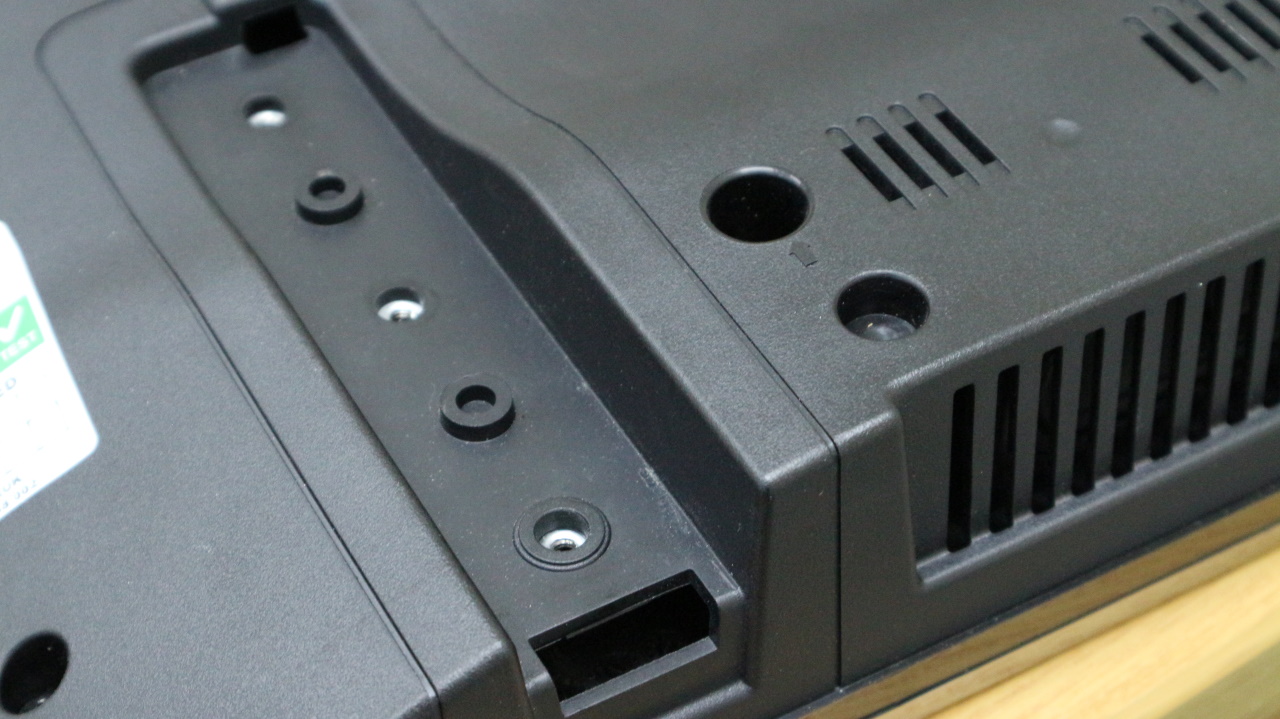
I had a wall mounted TV that needed to be desk mounted again, but the original feet were missing.

A quick (and solid) design and 3D print later, we had two new desk mounting clamps for the TV.

Mounted and fixed to the desk, it's going nowhere.

I could go on with more practical 3D prints this year, but you get the idea - a lot of things were fixed, repaired and produced with 3D printing this year. I doubt more than a day went past when I was not 3D printing something for someone or for myself.


The end of 2020...


The 3D printed Advent calendar's come out every year, they still are a great talking point both for 3D printing and the vast selection of different materials used.

If you want to see all the Advent calendar days printed, start at Day 1 here and on my original blog post series from 2017

Many of my past projects and experiments are still active in one way or another today, people continue to innovate and evolve ideas. Even as we enter 2021, 3D printing is still in it's 'early stages' of being useful to the 'average person'. When you start using 3D printing to solve every day problems, and turn design ideas into practical printing solutions it's a wonderful tool. 

We have seen some really great OpenSource and OpenInnovation 3D printing projects this year. I plan to cover these in 2021 and also get further involved with as many as possible.

Things I would like to see more of and help with in 2021 - Please reach out to me if you are doing or planning any of these, I will try to help if I can. (Most of the links below are to my past blog posts doing similar things).

  • The continued increase and use of sustainable (multi-use) filament spools / Cardboard and MasterSpool filament coils.
  • More recycled plastic content in 3D Printing - both as recycled filament materials and as re-used print waste. Recycling filament plastic (2015)
  • Greater development of direct pellet extrusion systems and materials for desktop and industrial 3D printers. - Here is one of my early Pellet extruder experiments from 2014
  • More tool-changing systems - additive and subtractive - manufacturing systems, continuous printing (belt-printers) and automatic build platform change systems.
  • I would still like to see many more light weight extruder+hot-end systems, ideally around 200g total weight. I see a lot of bowden based extruder systems that could/should benefit from a good quality, light and strong direct-drive-geared extruder and hot-end combination. Especially on machine using IDEX, they could be greatly improved with a move away from bowden to a light weight direct extrusion system, maybe 2021 will bring more to market.
  • I'm always looking for interesting 3D Printing filament materials, especially engineering grade or ones that that are matched to classic computer colours. A few have popped up during 2020 Printed Solid over on Twitter has a range of Retro computer filament colours
  • I'm still incredibly interested in paste extrusion, coupled with a tool-change system and some FDM printing it could offer a lot of good options for manufacturing and making.
See you next time, and if you have a new and interesting 3D printing project, development or material you want me to take a look at, do get in contact.

I hope you all had a safe and happy holiday season, and Happy New Year for 2021

Rich.

P.S - If you haven't yet found the joys of Podcast's, do consider giving them a go. I can strongly say that without Podcasts in my life, 2020 would have been 10x harder to 'experience'.


Please join me on Twitter @RichRap3D if you want to discuss more about 3D printing (or retro computing).

My Youtube channel is here, all 3D Printing and Hi-Def video content, I do hope to get back to publishing new video content in 2021.


Thanks for reading.


Friday, 16 September 2016

BigBox Duet Wifi Upgrade and Polyalchemy Elixir PLA filament testing

BigBox Duet Wifi Upgrade

During the summer I decided it would be good to upgrade the electronics in my E3D BigBox. I had already made some modifications adding extruder expansion to the RUMBA and experimenting with a over-complex automatic tool-changer system... more on that soon.

I was about to order a new electronics set, when the Think3D-Print3D team contacted me to see if I would be interested in looking at a beta version of their new Duet Wifi 32bit ARM RepRap electronics.


Obviously I was thrilled to take a look and I had an ideal machine in the BigBox to test it out.
Not only that but I also got the chance to try out the full colour 7" touch-screen for the DuetWifi too.


7" Full colour Touch screen interface - with it's own microcontroller, so you don't get any slow-down or drop in performance of the electronics by using it.


You can also watch this video over on YouTube in HD - you can subscribe to my channel too :)


At the same time I was contacted by Polyalchemy to see if I could try out a new type of 'modified' PLA called Elixir. That was also good timing as setting up any new electronics, firmware and mechanical system will use plenty of material in calibration and tuning for quality and speed.


Quality packaging, well sealed and Made in China.


Standard Spool size with 1Kg of filament (1.75 or 2.85mm)


I get asked to look at 'new' filaments and materials all the time. If it really is something new or different I'm happy to take a look and feedback print results and compatibility etc. The one thing that I find disappointing is when I work out the filament is just re-branded from an existing supplier or labelled up as a 'new', 'special' or 'eco-friendly' product when it's just the same as already on the market. There is nothing really wrong with this, apart from when people don't tell me - after I directly ask. I do try to look out for materials that have had some of their own development or innovation - or just people who genuinely want to make something good for the 3D printing industry and not just to cash in. Polyalchemy were looking to make something a little different - and for it to be very silky.

I was sent various test-sample grades and colours of the Polyalchemy Elixir filament over the summer, testing and feedback allowed some final tweaking and they have now released the first of their filaments for sale - natural white, you can get it here. 

Just to make it clear - I have no connection to Polyalchemy, I just found the material to be interesting and different from the everyday colours and finish of normal PLA. I tested it out on every machine, and had no problems with any of the different extruder systems or hot-ends from various manufacturers. It prints like normal PLA - I found a little extra heat would improve extrusion speed -I normally print PLA at 195 Degrees C. I ended up using Polyalchemy Elixir at around 208 to 215 Degrees C.


Some 'experimental' colours - very nice to print with.


If you need something with a very smooth and silky finish then this may be a good material for you to try out. I can genuinely say that many of the parts I have printed in this material now have prime locations all around my house. It's been one of the only filaments that my entire family have all wanted to be on display. They look less like plastic prints and more like artwork or quality made products, for that alone I am delighted.


I'm going to keep an eye on what Elixir colours are released next. As you will see below and in the video I have tried out a few, some are nicer to look at than others, but the natural white is a very good starting point for beautiful looking and artistic 3D Printed models.

Back to the BigBox Duet Wifi upgrade - 

My first task was to get the BigBox into a similar condition to my Steampunk BigBox - this involved a new heated bed, various modifications to the print carriage - now using my quick-fit version.


I only had an old style E3D Volcano heater block, so a quick modification to drill a new hole - added support for the new temperature sensing cartridges (therm / PT100 etc.)


Some other changes included a change to 400step motors on all axis and some hand-modification of E3D Volcano heater-blocks to hold the new style thermocouple cartridges.

Wiring needed to be modified for the Duet Wifi electronics, but most of the changes were to remove the RUMBA and replace.


The Duet Wifi board has been a joint development with Think3DPrint3D and also Escher3D - David Crocker at Escher3D also designed and manufacturers the Infra-red bed sensor's used on the BigBox Printer. David has also designed the PanelDue LCD touch-panel screen for the Duet board. I found this LCD screen was a very nice upgrade indeed!


I'm going to order another set of DuetWifi electronics. The firmware is soon to get dual independent extruder control so I'm very tempted to replace the BCN3D Sigma electronics with the DuetWifi system.

This is one where it's good to watch the video, so please let me know what you think and I'll share more about the BigBox Duet Wifi Upgrade if anyone is interested.

Thanks for reading, let me knwo what you think and if you are interested in also usign the Duet Wifi or testing out Polyalchemy Elixir PLA?

Until next time, thanks for reading.

Richard.